The Frogs Have More Fun...

Flowers


"All the names I know from nurse:
Gardener's garters, Shepherd's purse,
Bachelor's buttons, Lady's smock,
And the Lady Hollyhock.

Fairy places, Fairy things,
Fairy woods where the wild bee wings,
Tiny trees for tiny dames.
- These must all be Fairy names !"

(from Child's Garden of Verses
by R.L. Stevenson)


"Anyone can write a short-story.
A bad one, I mean."

(R.L. Stevenson)
----------------

"Science without conscience is the Soul's perdition."
- Francois Rabelais, Pantagruel
- Acc to/above is citated from: Medical Apartheid. The dark history of Medical Experimentation on Black Americans from Colonial Times to the Present, by Harriet A. Washington (Doubleday ; 2006 ; p. 1.)

----------------
"In the high society of the first half of the century, marriage, despite it's bestowal status upon the wife, was the most absurdity. Marriage, conferring instanteous rank or money, ... lost most of its prestige and moment right after the wedding. ...By the end of the century, spurred by Rousseau's moralistic Nouvelle Hèloíse, a contrary cult, that of virtue, arose. After 1770 conjugal and maternal love became not merely admissible, but, for some, moral imperatives. ...

[...]
...Rousseau, who sought for himself the crown of morality in ostensibly defending marriage, presents in his Nouvelle Hèloíse the most enticing and extended defense of illicit love ever penned. The root of the problem is that as the century progressed sensibility became confused with morality: passionate feeling, if expressed in a highly civilized mode with grace and nuance, makes us forgive the Rousseau of The Confessions, for example, his pettiness, his jealousies, his betrayals. This moral-amoral byplay, present already in the novels of Richardson, was to be more intense as the century unfolded."
-
Madelyn Gutwirth : Madame De Staèl, Novelist. The emergence of the Artist as Woman (10,15.)

;
"...As the social contract seems tame in comparison with war, so fucking and sucking come to seem merely nice, and therefore unexciting. ... To be 'nice', as to be civilized, means being alienated from this savage experience - which is entirely staged. [...] The rituals of domination and enslavement being more and more practiced, the art that is more and more devoted to rendering their themes, are perhaps only a logical extension of an affluent society's tendency to turn every part of people's lives into a taste, a choice; to invite them to regard their very lives as a (life) style." - Susan Sontag , on 'Fascinating Fascism' (-74; p 103;104-5 at Under the sign of Saturn)
; "Anyone who cannot give an account to oneself of the past three thousand years remains in darkness, without experience, living from day to day." (Goethe) - as cited by Sontag (on same compile; p. 137.)

;
"It is widely accepted that we are now living in the 'Anthropocene', a new geological epoch in which the Earth's ecosystems and climate are being fundamentally altered by the activities of humans. I loathe the term, but I can't deny that it's appropriate."
; (Goulson), Silent Earth : Averting the Insect Apocalypse (2021; p 47.)
;
"It is sometimes said that humanity is at war with nature, but the word 'war' implies a two-way conflict. Our chemical onslaught on nature is more akin to genocide. It is small wonder that our wildlife is in decline."
; (Goulson, 2021 ; 118.)
;
----------------
"If we believe absurdities, we shall commit atrocities." (Voltaire)
- Citated from; (Joy, Melanie), Why We Love Dogs, Eat Pigs and Wear Cows : An Introduction to Carnism(2010; p. 95.)
;

"In the presence of the monster, you have eyes and ears for nothing else."
; (Flora Tristan) : London Journal of Flora Tristan: the Aristocracy and the Working Class of England ; 1842-edit. (tr: 1982. ; p. 71.)

;
"Every minority invokes justice, and justice is liberty.
A party can be judged of only by the doctrine which
it professes when it is the strongest."
Mdme de Staêl
(on) 'Consideration sur le Révolution de la Francaise' [1818]


Showing posts with label Aliens. Show all posts

9/14/14

MSW Book Recommendation #41 ; "Alive! , she cried." or, "an object lesson in civilizations"

 
'We won't ruin Mars', said the captain. 'It's too big and too good.'

' You think not? We Earth Men have a talent for ruining big, beautiful things. The only reason not set up hot-dog stands in the midst of Egyptian temple of Karnak is because it was out of the way and served no large commercial purpose. And Egypt is a small part of Earth. But here, this whole things is ancient and different, and we have to set down somewhere and start fouling it up. We'll call the canal the Rockefeller Canal and the Mountain King George Mountain and the sea the Dupont Sea, and there'll be Roosevelt and Lincoln and Coolidge cities and it won't ever be right, when there are the proper names for these places. '

' That'll be your job, as archeologists, to find out the old names, and we'll use them.'

' A few men like us against all the commercial interests.' Spender looked at the iron mountains. 'They know we're here tonight, to spit in their wine, and I imagine they hate us.'

The captain shook his head. ' There's no hatred here …They probably don't mind us being here more than they'd mind children playing on the lawn, knowing and understanding children for what they are. And, anyway, perhaps all this will change us for the better. ...But one day Earth will be as Mars is today. This will sober us. It's an object lesson in civilizations.' ” (; Bradbury; Martian chronicles / Silver locust, p1956)

[Recommendation IV / 2014]

The Hop-Friend”
(A short-story by Terry Carr) ; p. 1962.

'What you boys would like
us cook up for the following post. ...Some pasta?'

; Only reluctantly did I select this science-fiction short-tail for current sequel on our recommendations(-series). That is said not from this for any substandard story, otherways wouldn't naturally had selected it in the first place. Quite the contrary, I think this particular story from human-alien-contact to some primer of quality. Even that, I have to admit, the scifi never was any my main interest here. Or, the 1900s fiction more generally thought, even.

But, I suddenly noticed we'd actually presented surprisingly little of the scifi here. From our former picks only Le Guin (...Recom 25 in the serie) and Huxley (Recom, 21 and half) seems by some justifications fit for that criteria. Shelley and Lovecraft only...distantly relating if any scifi considered. (; ...Albeit, I suppose we formerly devoted some words on Philip K. Dick too, but seems that particular Recom nowhere here remained. Same concerns the Pierre Boulle's [1912-94] Planet Apes too, a book more popular and better than the vast majority from lot more modern, maybe also more valued books as 'stricktly scifi'...or smtgh.) ; So let this here be some 'lazy' selection now...for it's 'only' a short-story and that selected of not bothering for any scifi novels. Of the same reasons, not many words at this recom.

Even though I've not much too familiar with, or read anyhow overwhelmingly this field-of-literature, seems it that by the earliest - I mean from the early/mid 1900s, - science-fiction was rather much an american phenomenom. At least on basis of my only limited readings from. Of course there were others, and actually a larger number or even majority from those writers perhaps had emigrated. Another P-O-V, I recall had read (...of some place, maybe it was the collection this story picked from) that in the early days there was some sort of division between the science-fiction writers who imagined their futuristic universes inhabited by humans, solely. In other words, in their stories the 'galactic colonization' having begun from the surface of Earth and characters representing solely the boys and girls (...Probably words by Asimov and him as some of the leading representants on that.) And, then (there were) writers who preferred to imagine the galaxies and stars inhabited by most various races and therefore the prevailing theme on the stories naturally was the alien-human contact. That 'trend' or that sort of fictional solutions most represented by Bradbury (...So it's quite natural we have the quote from his famous classic novel here above).
 
; Another interesting question, of course, arising from (many) stories of that latter 'group' likely was the question about alien sex. (Amongst the earthly species, about 99.5 per cent, or more, from the all species contain, stricktly or at least temporarily, male and female sexes. In case from the alien life-forms wouldn't necessary need to be so...but I don't know, it also been a quite fruithful source for stories. Many from the stories also been situated to some projected futures, or as well at the present times but on Earths surface, solely or mainly.)

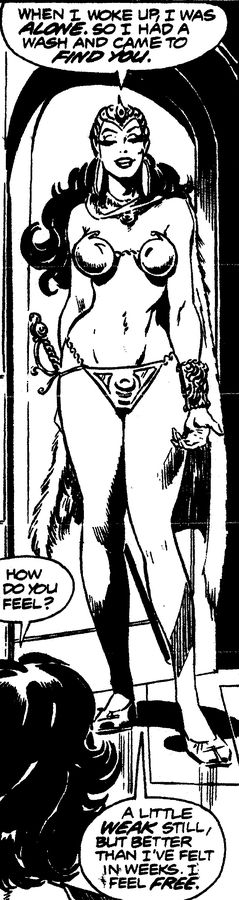
; Sola, your Alien Connection. Privately.


So, since from my early youth I've not read any science-fiction too enthusiastically or much. In fact, I think that on my later reading days I begun favoring the short-stories and -tales, just because I thought most from the larger (scifi-) novels all too frustrating bother for. Those, sort of, seemed offer nothing much worth any serious interest. Or, too little worth the some 600-800 pages blockbuster megaseller readings. In short, perhaps not so good ideas but lots of the story-telling. Much of a words, but less insight. As much plot-turns and humorism, but really not any important themes, sort of. (It's from the 1960s for more recent days I'm referring by this.) ; Naturally, I've missed a great deal from the better sort of stories, and, of course it's easy think various good exceptions from that above 'judgement'. Enjoyed a lot some Brian Aldiss's stories due their reflected environmental themes/content. Robert Silverberg's some better sort of storiest too. Fritz Leiber (1910-92), R.L.Howard, Doris Piserchia, (likewise Doris) Lessing...and others. Every dog seems had it's day, if I were to consider some of my (limited, yet unmentioned) scifi faves to some definite list (...I don't, of not reading scifi so much, like said before.)

; ...Any favorites selections only would appear some matter of an opinion, of course. Might be noted too the times having also lot changed. After the 1950s, I mean. (If we stop to contemplate on it for moment, that was an era when the belief for (/or dreamings about) some portable mini-reactor powered ash-trays and the nightmarish views from the nuclear total annihilation lived and waltzed at some fruithful co-existence. As both seemed like alternate but still completely realistic prospects from the close near futures to be seen. Thinking it little more carefully, only major difference of that for our present ages being that not bit of faith remains on for such everlasting solutions. Optimistically thinking I'd say we could call that some progress. Maybe the scifi has had its place on that development too. ; ...Anyway, permitted it then a birth of this new genre for literatures, christened for and later better known as science-fiction. (At least that's one way to look at that now.)

;...This particular story by Carr (1937-87) I did enjoy most because it - so much – resembled that 'good old time' science fiction. I fx discovered interesting description from the depicted alien creature, for it clearly had much in common w. the insects usual features. Fx, has the wings, and it sort disappears and reappears much like the Earthly insects usually do. Insect-resemblance of course common and usual feature to most alien creations of fiction, both at the books and cinema. Already the Wells's martians from the late 19th century have a lot of it, but only on their outer looks. (While maybe the usual comparison is for the amoeban, or squids, from their tentacles in particular.) ; But what's exceptional at the Carr's story, I think, is that those described features are so nicely bound for it's behaviours and general essence. (Of course, that also probably is not so rare as my limited readings would only seem to tell...) 
 
Seems he also written on prewords to that on a story-collection that the idea from how unlike is we'd to have any means of understanding the creatures of an alien planet was a popular idea at the scifi around the time. Quite expetable, or course. But it's actually just the same from the most other animal species we human encounter at this planet (of ours). Their different, from the appearance and mind, just because..them are different species (So I actually think E.R.Burroughs was some ways miles ahead compared to most by imagining his Martian deserts populated from various different races, even if that was quite stereotypically realized.) 
 
Also seems this (discussed) story to contain much of the 'classic elements' on scifi, fx that ever-fruithful problem about alien-man connection (/and that alien sex, even if it's not discussed), the created glass-domes artificial atmospheres over the artificial cities built for Mars, the robots, etc ; ...But also story, partly, seems tied for it's time of writing, fx reflects also the questions/dreams about human search on space from some substites for the planet Earth's declining resources. ...And also, esp. those unforgettable closing sentences at the story.
Every manner good scifi-tale, but that's just about how much space we could dedicate for it on this particular sequel. And may the stories live on. (; W-G.)

  --------

; ...From the rider (of this chapter) I at first thought it should be devoted for the wild animals. ...Just because I could not select any other proper for this 'Hop-Friend', but now I think – these circumstances considered – only suitable rider on this now is The Death. And quite obviously his ride has already 'till now been all too long (...half the centurys quite enough time 'in the rim', as everyone is very well aware about, even without lessons in civilizations.). And may it end as soon as possible. 

; ...About the awful Frog-Beth we are now obliged to announce that despite a greatest demand and curiosity for, not details from her was yet allowed to represent in public (of the safety and hygienic reasons). So, we'll postpone any material we have to the following sequels decorations, etc. But at least you have these couple primadonnas here, for now... 


( The latest posts! - @ Mulskinner Blog @ )


----------
Powered by
ScribeFire.

7/9/08

Indy Jones and the Magic of Crystal Skulls:

In skullduggery for gone Hollywood nostalgy, Cowboyish Smile and the Mothership Connection (by WhackoGecko 14.07.2008)


As the newest (we suppose) Indy movie enters soon DVD/Blu-Ray stage its about time for us to make some remarks. Not necessary fans of the serie, being grown merely in the borders of a Lucas-Spielberg cultural fantasy empire, but still kind of liked Indys adventures in the early three movies. As has been elsewhere noticed Indiana Jones films were originally loosely based on some 1930´s B-flicks, at least for the structure and jokes, as Indy´s main outlook was most

inspired by 1954-movie Secret of Incas, Charlton Heston acting as hero adventurer. Several primary real-life inspiration sources for the character has been mentioned, most renown the 18/19th century archeologists Giovanni Battista Belzoni and Hiram Bingham1. One can easily notice, that Indys character was already in the birth fulfilled with almost limitless amount of archeological nostalgia.


The reader might be little disturbed of the fact that here, in the MuleSkinner World, we have not seen but the some 60-70 minutes from the beginning of Indiana Jones and the Kingdom of Crystal Skulls. However, aware of the existence of an early manuscript2 for the movie, originally supposed to be next sequel in Indiana Jones saga, we take the flick mentioned in closer look for a brief passing moment in archeological time-scales. Don´t read any further if you feel it might spoil the fun from watching...


In similar manner as Indy´s archeological roots are at least contradictory (in plea for the adventurers qualities) his heroistic characteistics (romantism, fist-fights, tongue-in-the-cheek) are based on completely false mythical image; that of falsified image of the cowboy, ever so popular in old time westerns since the early days Hollywood until about 1960´s. Also similarly, like cowboys, Indy´s relation to women is also often completely lacking any sexual tone, so popular in nowadays TV-series or the cash-in blockbusters loaded with sexual tension – naturally Indy-films are also kids movies. In spite of that; Indy hardly ever even kisses the girl, if not in the end of the movie.


A timing of the last adventure is somewhat obvious one: 1950´s. That´s not just for the fact that the earlier parts were placed on years close to Second World War and hero should move to an aged state, but also for that Indys kind of romantic-mythical hero would not fit for the post war climate. It is also a notable coincident, that many of his adventures in earlier movies took place at the same part of the Africa continent (North-Africa/Middle-East) as Bogart-Bacall/Bergman war-time classic films Casablanca (1942)and To have and Have Not (1944). Indy´s treasure hunts (in 2 of three first movies)are in search of the grounding artefacts in Christian-Jewish mythologies (Grael/Ark of the Covenant), but Northern parts of the continent also serve as the only at least little mythical area in western hemisphere at the times of 2nd World War. Hollywoods most shining stars in the means of nostalgique, B & B are also placed there as them films were made during war times. For the Indy, magnet for anything nostalgic, the geographic placing is crucial for the mythological needs but also in needs of particular area and time for romanticed adventurer. Hero also needs something nostalgic(from 1980´s perspective) to fight against – mostly the nazis in early Indiana Jones films. In the Kingdom of the Crystal Skulls the enemy is changed to Sovjets, also now a foregone political power and nation and as such usable (as hell) in nostalgical sense.


So, the pre wartimes, afterwards often seen in nostalgic light, but not too much for variety of reasons, namely the happenings of 1940´s, serve as a framework for Indy´s first 3 adventures. He is there at home with similar mythical adventurers like Hugo Pratts Corto Maltese (who often wanders around the same corners of the world as Indy. Corto is also told to disappear in the Spanish Civil War, Indy however goes on). Afterwar, there is no place for such romantic heroes. Reason for that? One can find some answers in developing broadcasting networks, emerging global world trade dominance capitalism, or from just the fact that afterwar nostalgia appears to be totally different from pre-war times. Magic, witchcraft, optimistics, all typical for Indy-movies, more or less gone in post WW2-world. Indy can without problems fit into war-time scenes and action-fights with nazis as both are worth the adventure (in movie-sense), but his appearances in war times really serve to transformate the mythical cowboy image from late 19th century to the brand new age: That of the western civilization fighting against bad guys and decorated at the same time with some archeological mystics of 1920´s. In reality, also notable, the creation of Hollywood was fulfilled in that same decade often mentioned as the last truely mythical one in 20th century.


Typical for cinematic nostalgy characters, the movie cowboy is of course pure falsification (from its origins) and as such completely unbelievable in the real sense of the myth. So is his natural follower, the grave-robber archeologist. Leaving myths aside, Indy, bearing at the same time romantic idealism and all the characteristics of traditional cowboyish adventurer (the whip, the hat, the grin) hardly would fit for the limits expected from a post wartime hero. He is openly selfish, seeks archeological objects for his own pleasures as adventurer and is always in the habit of recklessly wandering from action scene to another, not necessary controlling situations by his sheer presence. The latter quality is naturally partly result from aims of Indy-films in their purpose to have fun on typical style features of the older adventure flicks. But Indy´s character as bearing the dignifying scars of war, the pessimistic melancholic tone or symbolizing the post war unity of the (winning) nations? No way.


So, Indy moves on to his 4th appearance in movies, which is said to happen in 1957. Now mythical powers are there again to make the circumstances bearable. Mythical in a sense that no human being, without extra-natural powers anymore fits into the role of traditional romantic hero so popular in post Second World War Hollywood nostalgia. Timing chosen is as succesful as its obvious: 1950´s, the first (and last) modern mythical decade available for nostalgic adventurers placed on imaginable frameworks of historical situations.


All this nostalgia taken into use for creation of falsified myths, it´s at least satisfying to notice that finally in the latest movie some real myths has been found. The 1950´s nostalgia kicks in, the Aliens, the atomic bomb (as mythical as convincing) are there. Pre war romantic master-archeologist, a little aged but as heroic as ever, is ready to serve the needs for supernatural deeds (CGIs, action-in-the-fast-lane, to name a few typical ones in nowadays movies). If Indy in the film is searching for some ancient artefacts he can´t in any means claim to be justified to, its just to link these mythical objects to the creation of fantasified myths of 1950´s he is actually facing. Certain scenes, like surviving from the mushroom cloud by enclosing in refrigerator, are but funny, but also lot more non-falsified as seen in the qualities of nostalgical needs. The joke (Lucas-Spielberg intentionally created one, the watcher might wonder?) comes from the fact that the real existing "magical" Crystal Skulls hunted have also been proven as modern falsifications.3


Taking the Roswell-connection to bit deeper examination4, its quite rational to ask for why it imight feel such unfitting to have aliens included in Indy-movie? As Indy´s actions and adventures are as unbelievable in the early parts too. Possibly its not kind of kids stuff, but serves well as quest for a truely believable adventure story (as nostalgic fantasy). It can also be noted that concerning Indiana Jones fantasies the extra-terrestrial element is more or less unavoidable (in the movie placed in 1950s), if there is to be any continuation for the archaic religious mythologies used and reused in earlier parts. The alien-human origin myths also serve to support the new transformation of the hero (from dignified archeologics professor/graverobber-wanderer to an aged superhero in the beginning of Nuclear decades.) Not to mention the need for nostalgical falsification of the old mythologies that in reality don´t have much in common with the archeological field, even less with Indiana Jones actions.


So, on the basis of myths, the Roswell connection in the film of the 1950´s is at least as defendable as placing mythical sacrifising ceremonies from distant times in the prevailing war years (three first Indy-movie sequels were situated in the years 1935-1939; see Wikipedia). Perhaps one of the most cashable modern myths(meaning the X-files and similar series based on rumours surrounding the Area 51), is also chosen for the main subject of coming next movie (if there will be any). That being the case also because it would be quite hard to imagine anybody else than Harrison Ford acting the role of Indy ? Or perhaps the dice is already cast, and we can give up hoping for more non-falsified true nostalgia...perhaps we are even doomed to see a brand new actor taking the role of Indy in the early adventures on the search of the unknown origin of Crystal skulls...as created by a mythical pre-European contact headhunter tribe inter-married with Alien Conquistadors? Hopefully not...


Notes:


1. Comparison to Indy´s main real-life models is interesting for the fact that the wanderer Bingham ´originally´ found (or at least brought to wider public acclaim) the lost city of the Incas, Macchu Picchu. Belzoni was an explorer, a pre-runner in ´archeology´ at his times, best known for first locating the entrance to the great pyramid of Giza. See Wikipedia. In Belzonis times there was not really any real difference between archeology or methods nicely described as treasure hunting the (valuable) artefacts in old tombs. As well-known, Indy´s doings on archeological field are much of the same.

2. Known as Indiana Jones and the City of Gods (F.Darabant/G.Lucas), an early manuscript rejected in 1990´s. As one might easily notice, it is rather coincidence that the unused script should have been given the name commonly used as translation for Aztec-city Teotihuacan (in fact more correct translations suggested are as ´birthplace of the gods´ or ´place of those who have the road of gods´, see Wikipedia) which is, still used in contemporary language when meaning that particular city. The grounding and rulers of Teotihuacan have remained quite mystery, which explains the usefulness of the name of the place in nostalgic recycling of its mythical means (as re-creating the Indy-Hollywood mythologics).

3. Rincon, Paul, ´Crystal Skulls are Modern Fakes´, on 23.5.2008; Also noted on this blog: WhackoGecko, ”Newspost#2505” on 26.5.2008.

4. Roswell incident has inspired a multitude of films, series and of course books. Indy´s connections to the episode are, of course, mainly influenced by the UFO-myths connecting alien races to the beginning of first ancient cultures and civilizations (in North/South Americas prehistory). Also, widely noted is naturally the connection between the founding place of the crystal skull, carved lines on the ground of desert in Peru by the ancient Nazca-civilization. Nazca-culture has been most widely popularized with UFO-mysticism by Erich von Däniken et his followers.